 A natural expression of abundance at the Olympic National Park in Washington state In the Northern Hemisphere, as the Wheel of the Year steadily turns toward longer nights and colder temps, we leave behind the last days of harvest season both literally and figuratively. Looking inwards, this is a special time to gather the bounties we have cultivated throughout our season of growth with heartfelt gratitude. Continuing to explore Sri Patanjali's 8 limbs of Yoga, Santosha stands out as a timely principle that embodies this deep sense of contentment and satisfaction with all that we already have. Sri Patanjali's first limb holds both the Yamas and Niyamas; yogic ideals that focus on our behavior in society (the Yamas) and our behavior toward ourselves (the Niyamas). The second Niyama, Santosha is a wise precept that inspires a full embrace of what one does have in order to relieve any desire for what one does not have. The Niyamas: Saucha - cleanliness Santosha - contentment Tapas - self discipline Svadhyaya - self study Ishvara Pranidhana - devotion/self surrender 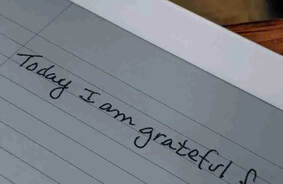 There are many ways to study and practice contentment in our daily life. One common activity is working with a gratitude journal to process and record these precious treasures. Getting community involved can raise the energy of Santosha to a whole new level when friends and family are involved by purposefully taking the time to share what we are thankful for, from the simple things to the more grand. As enticing as they sound to me, I haven't ever been very successful keeping up with a gratitude journal (maybe one day!). Instead, my personal gratitude practice actually leans into another Eastern spiritual system, Reiki. Similar to Yoga, Reiki has it's own set of guidelines for behavior towards others and oneself. The founder of Reiki, Sensei Mikao Usui, taught his students the Reiki Gokai, to recite every morning and evening. The Reiki Gokai can be translated as the Five Precepts of Reiki. Sensei Usui believed these precepts to have a healing effect, keeping the Reiki practitioner's energy in a healthy and balanced state. The Reiki Gokai are very simple, but at times easier said than done. They are as follows: Just for today Do not get angry Do not worry Be thankful Do what you are meant to do Be kind to others For my personal practice, I paraphrase the principles into: Just for today I release anger and worry I dwell in gratitude I act from integrity and compassion In my experience, reciting these principles every morning does feel like a healing practice to help reset perspective and shift my energy back into balance. Taking the time to sit with each precept, noting what feelings may be triggered and just breathing with that awareness on a daily basis can be great for growth and reflection.
I hope these different practices inspire you to deepen your personal connection with Santosha and create your own healthy sense of contentment!
0 Comments
Leave a Reply. |

AuthorHi, I'm Erika Prater, a wellness practitioner and mixed media artist. Archives
December 2025
Categories |
 RSS Feed